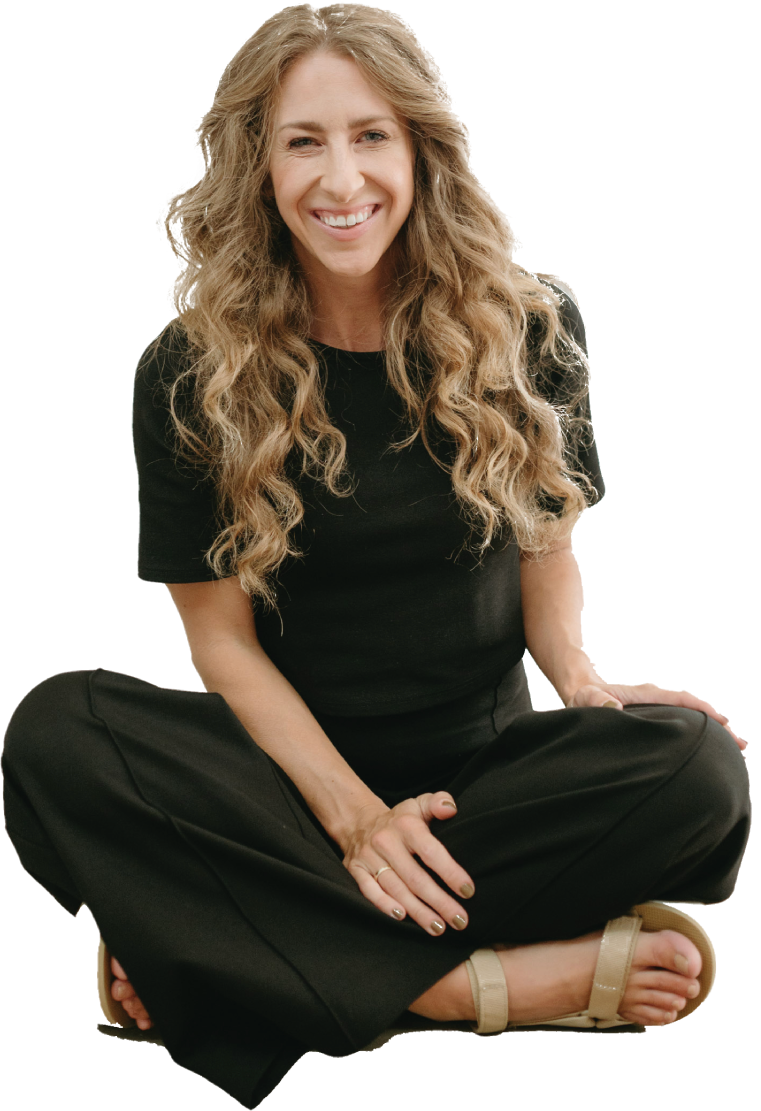
Hello, my friends. Welcome to episode two of the nine episode series we’re calling The Analog Renaissance.
We were the only people still on the floor at midnight. Everyone else had professional booth builders setting their booths up for them. We were there with extension cords and hot glue guns and fabric swatches and an actual garden bed that we’d somehow convinced security to let us bring inside.
And I remember thinking, either this is brilliant, or we’re about to be the laughing stock of this entire trade show.
Welcome to episode two of The Analog Renaissance, a nine part series where I’m sharing the eight different ways that we have stepped fully into the rise of analog, a strategic advantage for creatives and businesses in this very moment.
Our world is leaning analog, and that shift is creating real opportunity if you know how to meet it.
If you’re interested in all the data that backs this up, you’ll want to listen to the first episode of this series, called The Wake Up Call.
Our analog advantage, way number one, is in person. ROI outperforms.
Now, ROI stands for return on investment. After years of digital everything, there’s this growing hunger for face to face rooms, handshakes and hugs and conversations.
The research that really compelled us is this. Face to face meetings are 34 times more effective than email. Zoom fatigue is at an all time high. And what takes months and months of cold outreach can easily happen in a single conversation.
So we asked ourselves, what would replace months of cold outreach, if not years, with something that was direct and human and so incredibly memorable?
Well, the answer was obvious.
We had to show up in person, in a room full of people who’d never heard of us.
So we booked a booth at the world’s largest licensing expo in Las Vegas. We rented a minivan. We filled it with all of our analog beauty. Patterned wallpaper and plants and bags of soil and mood boards and hand sewn lampshades and draped fabric swatches.
Now, this was our very first time exhibiting at a trade show. It was a massive investment.
We had gone big, because that’s what we do. We booked one of the largest booth spaces that we could, and we were brand new to the scene. Nobody knew who we were in that arena.
And most concerning of all, we only had six appointments booked after weeks and weeks of outreach.
Now, to put that into perspective, this is a three day event, and I want to say there were 150 spots that we could fill.
We had six.
So picture the biggest convention center in Las Vegas. Every booth around us was full of LED lights and slick displays and professional booth builders. Pokémon was down the hall. It looked like a tech conference.
It was impressive, but it felt cold.
So we didn’t really intend to do anything differently, but it turns out that it was.
We just showed up and did our thing. We showed up and did the only thing that we know how to do, and it stood out.
My goodness, we planted fresh flowers that you could smell from literally 15 booths down the aisle. We hung handmade clay birds from the top of our booth that you could see from almost anywhere in the arena.
We built DIY walls and we draped fabric everywhere. We had candles that you could smell. We had installations that were gorgeous. We created a garden bed in the middle of the booth.
We made it an experience that touched all five senses.
We had an island booth, so we were adamant that you should be able to come into it from any angle, any of the four sides, but most importantly, that you felt invited to do so.
Many of the booths feel very intimidating, like you would never walk in unless you had an appointment.
We wanted to draw people in to come and sit and touch and smell and experience, whether they had ever heard of us or not.
So again, we did not do our research. We just showed up and did our thing.
We only know how to do this.
We prioritized delivering a moment of connection and an experience for the people that came by our booth.
So we had some panic moments. Six appointments on a 150 slot schedule, hoping for a strong walk by game.
And here’s the thing.
By 2 p.m. on day number one, we were completely booked for the duration of the entire show.
We had to run to Target that night and build a second meeting space out of random furniture we could find, just so we could take double bookings.
So the result was over 100 sit down meetings with brands, over 200 passing conversations, and we walked away with 220 direct contacts. Cell phones, emails, handshakes, names, faces and a follow up strategy.
I’m not exaggerating. We literally made 10 years worth of contacts in two and a half days.
And one of the best things of all is that we needed this.
We walked away on fire for our industry.
Surface pattern design is alive and well. Licensing is thriving. It is a multi billion dollar industry with more opportunity than I could have ever even imagined.
Pattern is having a moment. From bold wallpaper to checkered mugs to stripey pajamas and floral notebooks, the world is embracing color and texture and personality again.
We are officially living in the era of pattern drenching, and honestly, I’m so here for it.
If you’ve been noticing it too and thinking, I wonder if I could make patterns, you absolutely can.
And the best way to do it is by using Adobe Illustrator. It’s where I created my very first repeating pattern over a decade ago, and it’s still the tool that I use and teach today, because it’s designed for this kind of creative work and trusted across the entire industry on a global basis.
Illustrator makes designing seamless repeating patterns feel intuitive. You can easily tweak colors, scale your artwork and move things around without starting over.
Everything stays crisp because it’s all vector based.
And when you’re ready to put your pattern onto a real product, Illustrator works beautifully with printers, manufacturers and licensing partners.
So whether you’re creating patterns for your notebooks, your living room walls, or dreaming of turning your creativity into a career, Illustrator helps your ideas go from sketch to look at what I made.
Head on over to our show notes, open Adobe Illustrator and have some fun.
Pattern is having a moment, and Illustrator is how you join it.
The question for you.
I’m not telling you to go exhibit at a trade show unless you want to.
You don’t need to buy a flight to Las Vegas and wrangle plants in a minivan or hang fabrics on a wall.
But I am asking you, what would take months of cold outreach in your world that you could replace with something direct and in person and human?
Some ideas for you to ponder.
It could be a local workshop. It could be attending a trade show rather than exhibiting at one. Maybe just attending it.
It could be something simple, like a coffee meetup or a pop up market or an in person collaboration or a conference that you really show up for and do those breakout meetings and really, really connect with people.
The principle here is when everyone else is optimizing for their digital connection and outreach strategy, showing up in real life becomes a superpower.
It’s a zag to their zig.
And when everyone is zigging, if you can zag, my goodness, it stands out, and it really makes a huge difference.
At that trade show, I met a company that would change everything.
They work with talent like Ellen DeGeneres and Martha Stewart to take them to market.
They approached our booth because of the way that it looked and smelled, because of the experience, because they instantly could feel what we were made of.
We are now in stage two of a three stage process with them, and it’s exciting.
I can’t tell you more yet, but it’s so exciting.
We really accomplished what we set out to do.
So we don’t even plan to go back to the expo right now.
And it started because we hung flowers in a room full of LED lights.
We learned so much from this trade show experience, and we decided from the very beginning that we wanted to document the entire thing. The drama, the wins, the losses, the entire week of setup, from booth design to buyer conversations.
And we made a 40 minute documentary.
This is free to watch. I think you would enjoy it. It is so beautifully done and really takes you through the entire experience.
You can watch this at bonniechristine.com/tradeshowhandbook.
We also put together a 140 page guide for anyone who wants all the details, like our booth builder and how much it cost and the breakdown of everything.
This guide would have saved us so much headache and so much time.
It is available for $97 if you want all of the resources and details.
I’ll also link this for you in the show notes so you can see exactly how it all worked.
But I think you would really love the documentary.
Here’s what I didn’t expect.
After that trade show, I came home with something so much bigger than business contacts.
I came home with confirmation of something we had been feeling in our gut.
Every single brand I talked to told me the same thing.
We want art with story. We want human made. We want to know who the artist is.
Not AI generated.
In fact, they are running away from anything that feels AI generated.
Not mass produced, but deeply, beautifully human.
And that changed everything about what we were about to create.
In the next episode, I’ll tell you about the decision we made that led us to tear down eight years of work and rebuild it from scratch.
I’ll see you there.
My friends, create the beauty that you want to see come alive in the world.
And remember, there’s room for you.